05 · Power systems · Industry experience
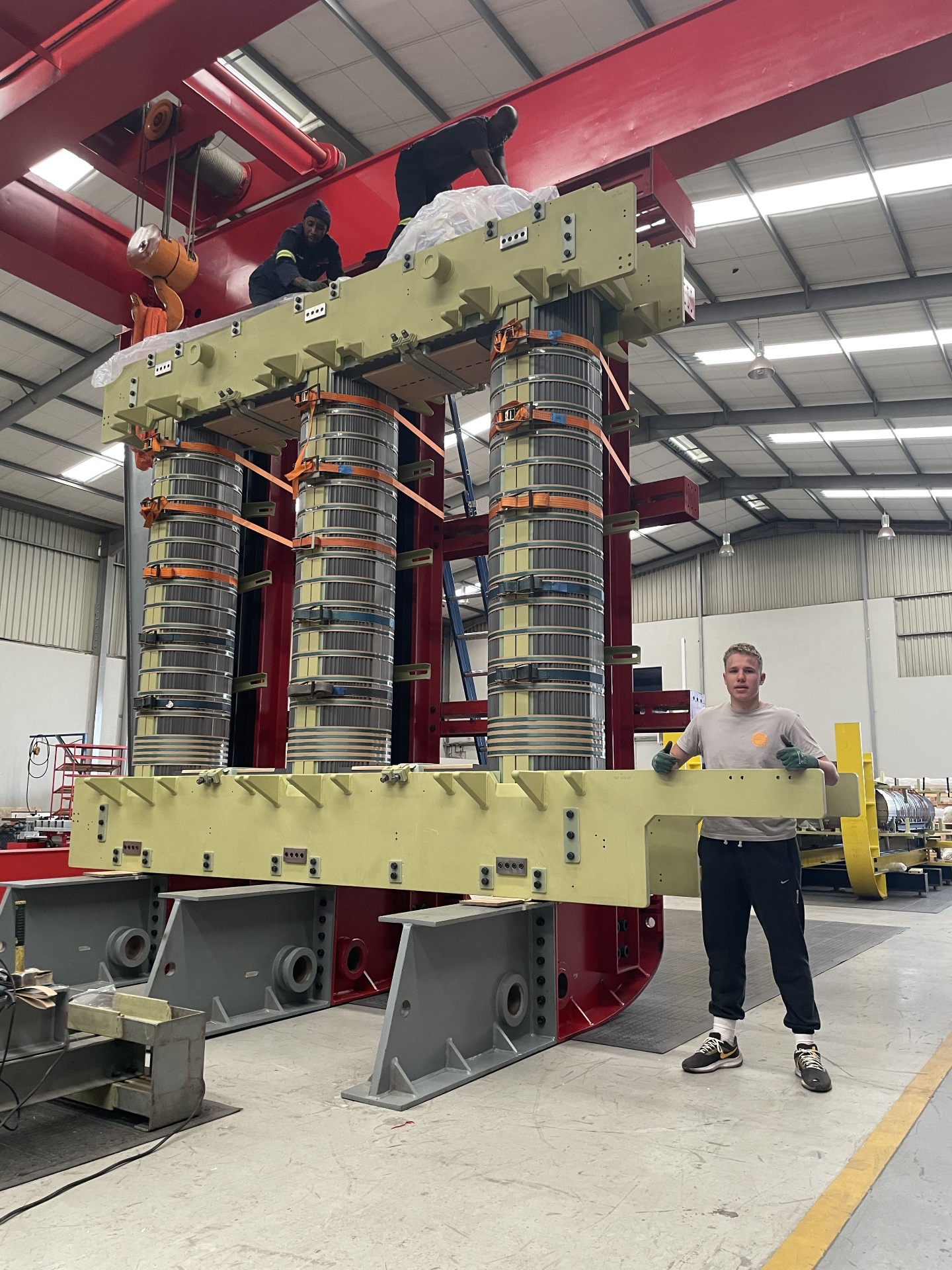
40-Tonne Power Transformer Core
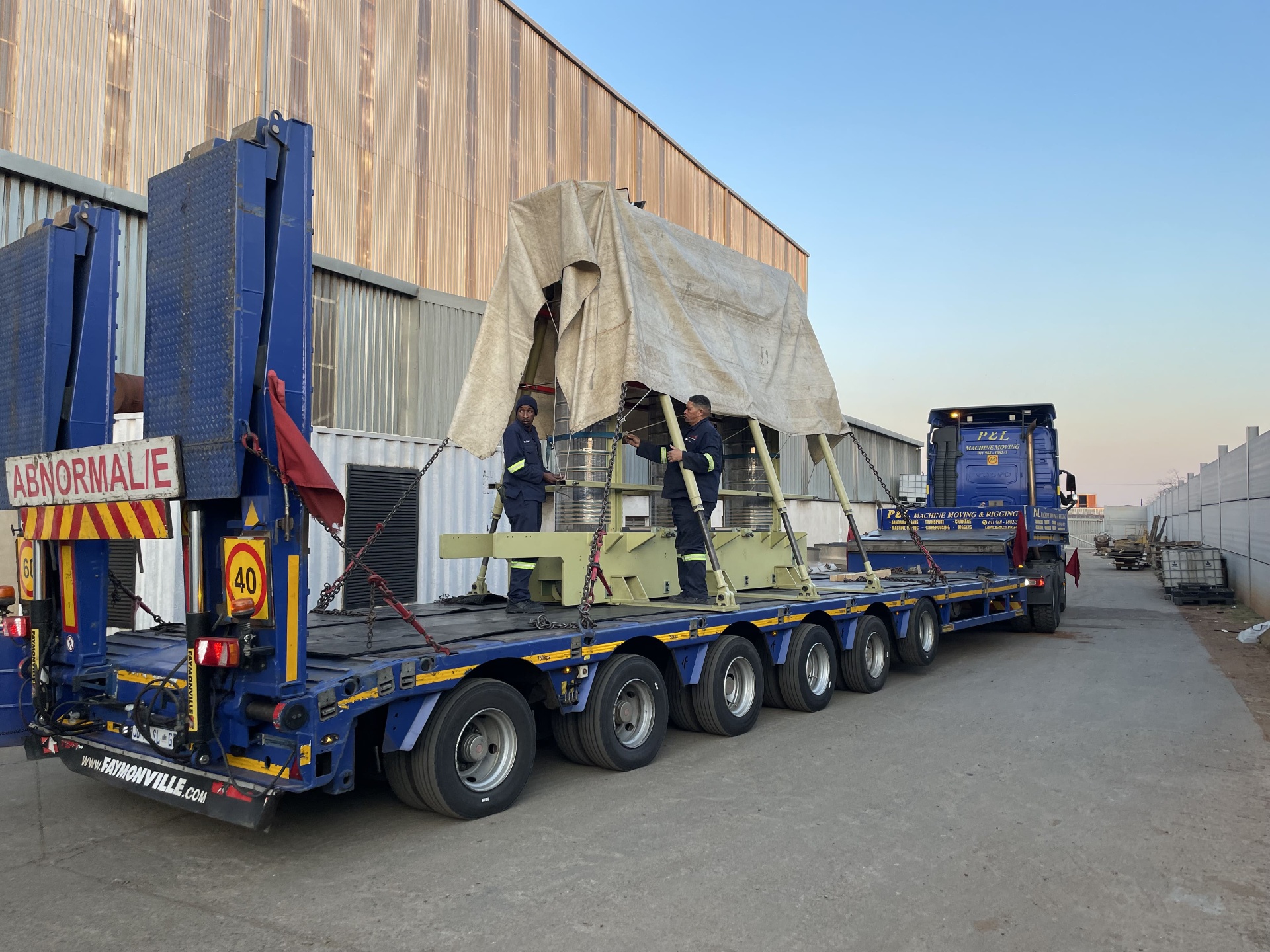
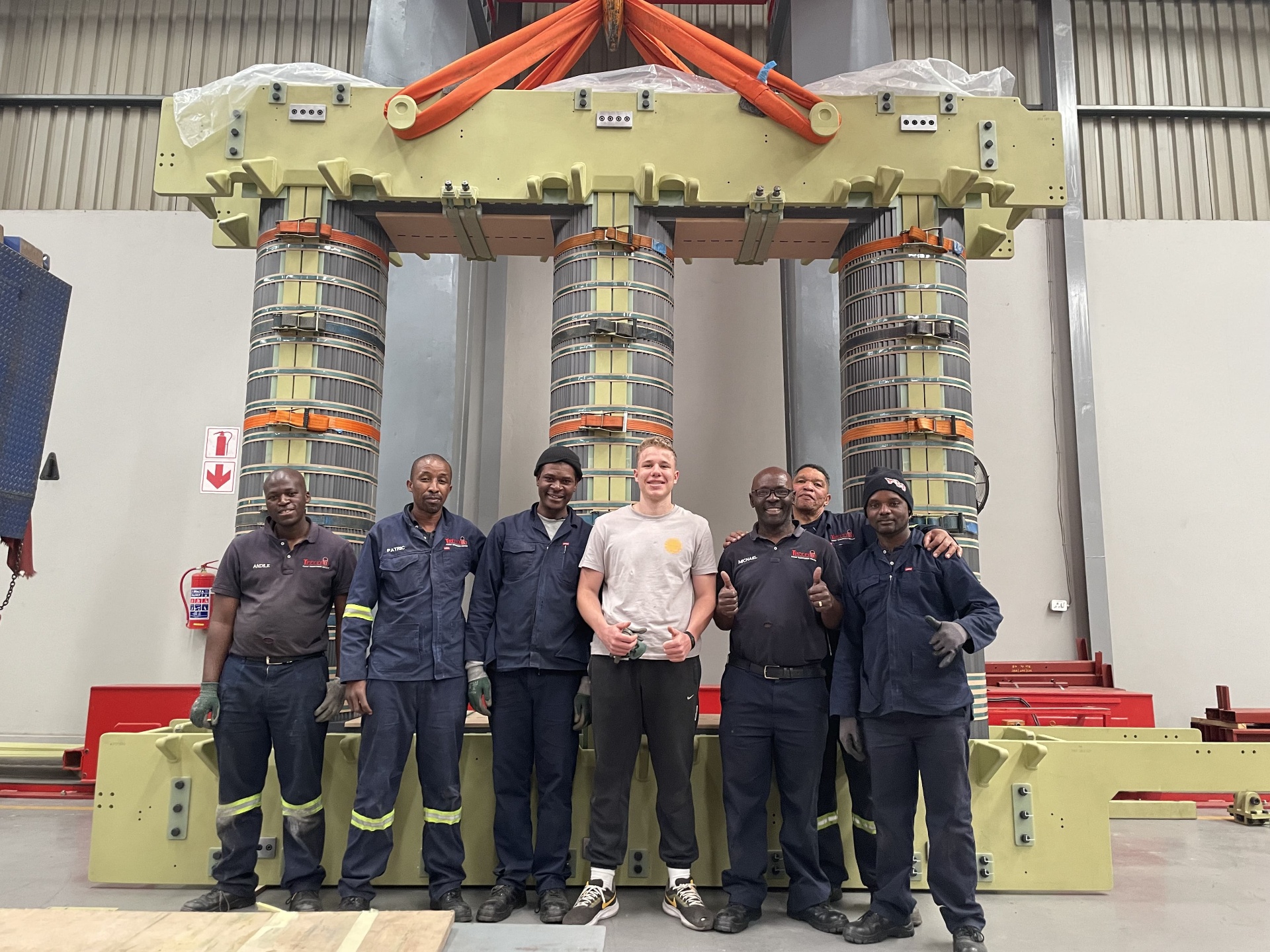
Time on the factory floor at Trecento Power Management, following a 40-tonne power transformer core through its full build: initial preparation of the steel, the core stacking itself, and finally the abnormal-load delivery to the end customer.
Trecento Power Management — preparation, core stacking and delivery
Preparation
A transformer core is built from thousands of individually cut laminations of grain-oriented electrical steel. Before stacking begins, the material has to be received, checked and laid out by grade and geometry, with burrs and coating damage taken seriously — a single shorted lamination path adds eddy-current loss that the finished unit will carry for its whole service life.
Core stacking
Stacking the three-limb core is slow, methodical work: laminations are built up in step-lapped joints so that flux crosses between limb and yoke with as little reluctance and noise penalty as possible. Alignment, clamping pressure and joint overlap all have to stay within tolerance across a structure that ends up weighing roughly 40 tonnes.
I worked alongside the assembly technicians through this phase, which is where the textbook magnetic circuit stops being an abstraction: reluctance, saturation and loss are all decisions someone makes with their hands.
Delivery
The final phase was getting the unit off site. A core of this mass moves as an abnormal load on a low-bed trailer, which brings its own engineering: load securing, mass distribution, route and permit constraints, and protecting the core from mechanical shock in transit. Handing it over to the customer closed the loop from raw steel to installed plant.
What I took from it
Manufacturing reality — tolerance, handling damage, sequencing and the cost of rework — and a much more physical intuition for power equipment. It also directly informs my metering and energy-billing work, where the assets being measured are exactly this kind of plant.